
TL;DR: The best earning countries for online income in 2026 are the same ones that pay the highest ad CPMs — Greenland ($22 CPM on URL shorteners), United States ($12), Canada ($11), United Kingdom ($10), Germany and France ($8 each). Geographic mix of YOUR audience matters more than total traffic volume. A 5,000-click month from US visitors out-earns a 50,000-click month from Tier-3 traffic by 2-3x. This guide breaks down why country tiers exist, exact published rates from monetizing platforms, and how to deliberately attract higher-paying geographic audiences.
I’ve watched the same lesson hit creators in publisher Telegram groups for years: someone posts excitedly about hitting 50,000 monthly clicks → asks why their earnings are only $30 → realizes 95% of their traffic was Tier-3. The volume looked great. The country mix was wrong. This article fixes that confusion with real numbers and a concrete path to higher-tier traffic.
The Honest 2026 Country Tier Map
Online income (URL shortener earnings, ad revenue, affiliate conversions) flows in tiers determined by advertiser purchasing power in each market.
Tier 1 — Highest CPMs ($8–$22 per 1,000 clicks)
The top-paying countries for online ad revenue in 2026:
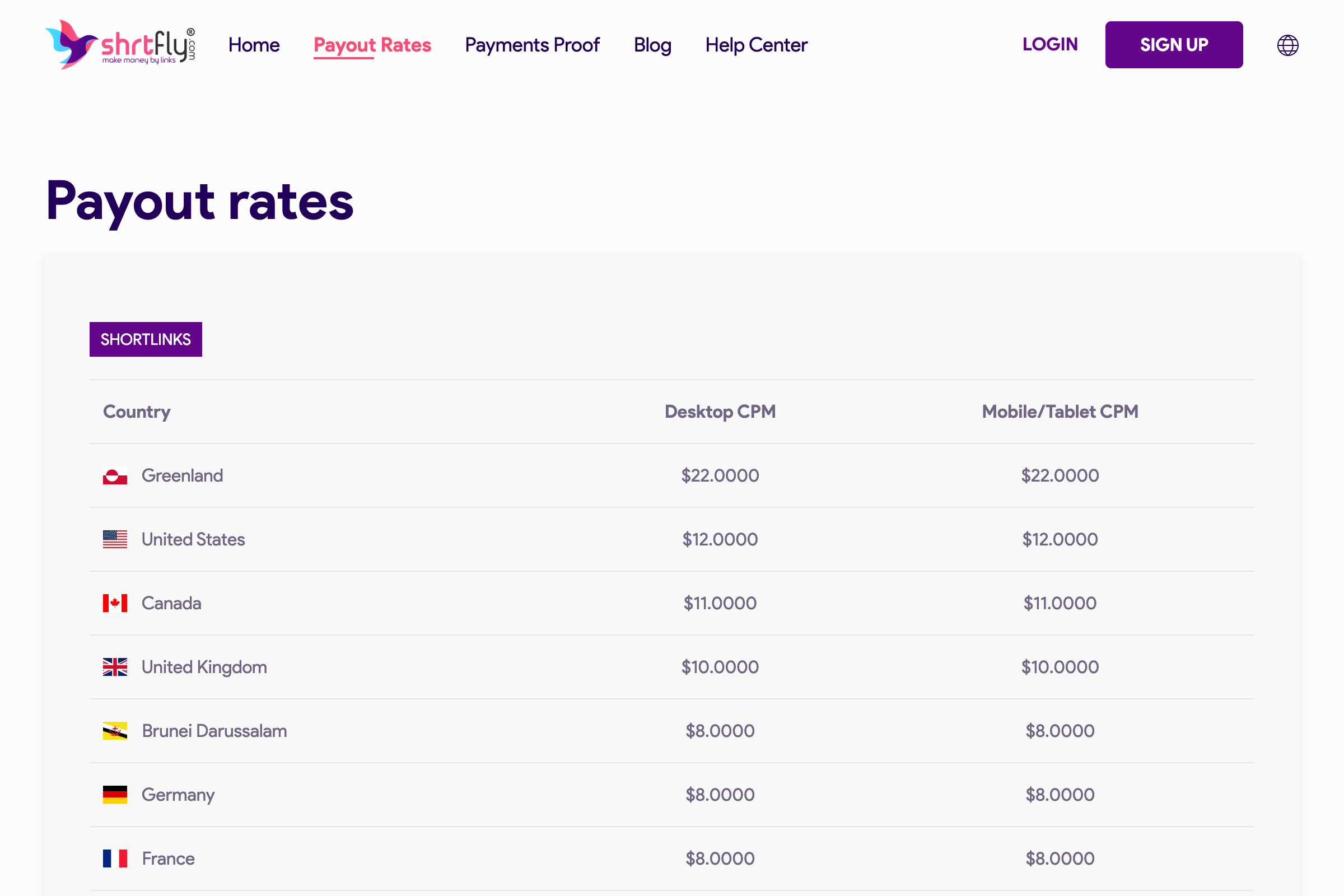
The full Tier-1 list:
| Country | URL shortener CPM | Why it pays high |
|---|---|---|
| Greenland | $22 | Tiny market, low competition for ad slots |
| United States | $12 | Largest advertiser spend globally |
| Canada | $11 | High purchasing power, Tier-1 advertiser bidding |
| United Kingdom | $10 | High GDP per capita, mature digital ad market |
| Australia | $9 (typical) | Premium English-language audience |
| Germany | $8 | EU leader, strong B2B advertiser base |
| France | $8 | High-value EU market |
| Netherlands | $7–$8 | Affluent, high digital adoption |
| Norway / Sweden / Denmark | $7–$9 | Nordic premium tier |
| Switzerland | $8–$10 | Highest GDP per capita |
Tier 2 — Mid-Range CPMs ($2–$7 per 1,000 clicks)
Strong commercial markets with moderate ad spend:
| Country | URL shortener CPM range |
|---|---|
| Brunei Darussalam | $8 (high outlier) |
| Brazil | $5–$7 |
| Spain | $4–$6 |
| Italy | $4–$6 |
| Singapore | $5–$7 |
| UAE | $4–$6 |
| Saudi Arabia | $4–$5 |
| Mexico | $3–$5 |
| Thailand | $4–$6 |
| Poland | $3–$5 |
| Belgium | $4–$6 |
Tier 3 — Low CPMs ($0.50–$2 per 1,000 clicks)
Large audience markets with currently low advertiser bidding:
| Country | URL shortener CPM range |
|---|---|
| India | $1–$3 |
| Pakistan | $0.50–$2 |
| Bangladesh | $0.50–$2 |
| Indonesia | $1–$2 |
| Philippines | $1–$2 |
| Vietnam | $1–$2 |
| Most of Africa | $0.50–$2 |
The takeaway: a 5,000-click month from US visitors earns ~$60. The same 5,000 clicks from Pakistan earns ~$5. Same effort. 12x revenue difference.
Why the Tier System Exists (It’s Not Arbitrary)
The tiers track advertiser economics, not platform favoritism. Three factors:
1. Per-capita ad spend. US advertisers spend ~$1,200 per internet user annually. Indian advertisers spend ~$50. The 24x gap shows up directly in CPMs.
2. Currency strength. Advertisers bid in their local currency. A $1 CPM in INR-denominated bids equals $0.012, but ad payouts are in USD — the math gets compressed.
3. Ad inventory competition. US ad slots are bid up by thousands of competing advertisers. Tier-3 ad slots have fewer bidders, so prices stay low.
The pattern is durable. Tier-1 has been Tier-1 for 20+ years. Tier-3 has slowly inched up but still sits at fractions of Tier-1 rates. Don’t expect this to flip in your career.
What Country-Mix Means For Your Real Earnings
Run the math for any audience size:
Scenario: 10,000 monthly clicks
| Audience country mix | Monthly URL shortener earnings |
|---|---|
| 100% USA | $120 |
| 80% Tier-1 (US/UK/CA/AU/DE) + 20% Tier-3 | $95–$105 |
| 50/50 Tier-1 / Tier-3 | $60–$70 |
| 100% India | $10–$30 |
| 100% Pakistan / Bangladesh | $5–$20 |
The country mix dominates. A 200K-monthly-click channel that’s 95% Indian-traffic earns ~$200. A 20K-monthly-click channel that’s 80% US-traffic earns ~$200. Same income, 10x effort difference.
If you have a choice in audience targeting, picking a Tier-1-heavy niche from day one is the highest-leverage decision in monetization.
Beyond URL Shorteners — Country Tiers in Other Online Income
The tier pattern repeats across nearly every online income model in 2026:
AdSense display ads:
- US RPM: $5–$25
- UK RPM: $4–$15
- India RPM: $0.30–$2
YouTube Partner Program:
- US RPM: $4–$15
- UK RPM: $3–$10
- India RPM: $0.30–$2
Affiliate marketing (commission per purchase):
- US sales convert at higher purchase prices
- Tier-3 sales convert at lower prices
- Same product, 5–10x revenue difference per sale
Freelance / service income:
- US clients pay $50–$200/hour
- Tier-3 clients pay $5–$30/hour for similar skills
- Same skill, 10x rate difference
The lesson is uniform: Online income tracks geographic audience, not just audience size.
How to Deliberately Attract Tier-1 Audiences
For creators who can choose their topic / niche / language, here’s how to skew toward higher-paying audiences.
1. Write/publish in English
English-language content reaches Tier-1 markets natively. Hindi/Urdu/Bengali content limits you primarily to Tier-3 markets. The same article in English gets ~5x revenue per page-view than the same article in regional languages.
2. Pick niches Tier-1 audiences search for
- High-tier: SaaS reviews, US tax guides, finance/investing, travel to North America/Europe, software tutorials, B2B services
- Mid-tier: Tech reviews, fitness, recipes, parenting, hobby photography
- Low-tier: Local news, regional entertainment, entrance exam prep (mostly India), regional politics
3. Optimize for English-search SEO
- Target keywords with US/UK search volume
- Focus on Google US (default) for ranking decisions
- Build backlinks from US/UK sites
- Use US English spelling (color not colour, organization not organisation)
4. Publish at Tier-1 timezones
If you’re going to publish daily content, publish during peak Tier-1 hours: 8am–11am ET (US) catches the morning audience, 6pm-9pm ET catches evening browsers. Tier-1 audiences see content faster, more clicks land while bidding is highest.
5. Build distribution in Tier-1 communities
- Reddit (US-dominated): r/passive_income, r/personalfinance, r/freebies
- US-based YouTube channels for collaborations
- US-based Twitter/X presence
- LinkedIn for B2B audiences
- US-themed Telegram channels
6. Avoid distribution channels that skew Tier-3
- WhatsApp broadcasts (heavily Tier-3 in many regions)
- Facebook groups in regional languages
- Sharechat / regional social platforms
- Telegram channels in non-English language
The goal isn’t to ignore Tier-3 audiences (they’re real humans, valid audience). It’s to deliberately build Tier-1 audience SHARE so the per-click revenue averages higher.
What Country-Targeted Geo Mix Actually Looks Like in Numbers
Three real publisher examples (anonymized):
Publisher A — Hindi-language Telegram channel about exam prep
- 20,000 subscribers
- 60,000 monthly clicks
- Country mix: 95% India + 5% mixed
- Monthly URL shortener earnings: ~$70
- Revenue per click: $0.0012
Publisher B — English-language YouTube channel about SaaS tools
- 8,000 subscribers
- 25,000 monthly description clicks
- Country mix: 65% US/UK/CA + 35% mixed
- Monthly URL shortener earnings: ~$235
- Revenue per click: $0.0094
Publisher C — English-language Telegram channel about cracked Windows software
- 35,000 subscribers
- 200,000 monthly clicks
- Country mix: 40% US/UK + 30% Tier-2 + 30% Tier-3
- Monthly URL shortener earnings: ~$1,150
- Revenue per click: $0.0058
Publisher B with smaller audience earns more per click than A and is closing on C in absolute revenue with 1/8th the clicks. Country mix is the difference.
The Honest Tier-3 Income Path
If you’re geographically locked into Tier-3 audience (which is fine — most creators are), the path is different but still works:
1. Volume over CPM. Build for scale. 500,000 monthly clicks at $1 CPM is still $500/month. Reachable at large channel sizes.
2. Stack other income streams. Tier-3 audiences still convert on affiliate offers (often higher CTR than Tier-1) — stack affiliate commissions on top of shortener clicks.
3. Service income from Tier-1 clients. If you build content skills (writing, video, design) on a Tier-3 audience, you can sell those skills to Tier-1 clients via Upwork, Fiverr, or LinkedIn for 5-10x your local rates.
4. Specific Tier-3 niches that pay well: crypto/airdrops (Tier-1 advertiser bid even on Tier-3 traffic), forex/trading (high commercial intent), VPN/security (cross-tier ad buyers).
The takeaway: Tier-3 isn’t a dead end. It just requires different math — volume + stacking instead of premium CPMs.
We covered specific Tier-3 monetization paths in URL shortener earning real or fake and Telegram channel monetization.
Quick Country Tier Lookup
If you only want one chart, this is it:
| Tier | Countries (top examples) | URL shortener CPM | AdSense RPM (rough) |
|---|---|---|---|
| Premium | Greenland, Switzerland, Norway, Iceland | $15–$22 | $10–$30 |
| Tier-1 | US, UK, Canada, Australia, Germany, France, Netherlands | $7–$12 | $4–$15 |
| Tier-2 | Brazil, Spain, Italy, Singapore, UAE, Mexico, Saudi Arabia | $3–$7 | $1.50–$5 |
| Tier-3 | India, Pakistan, Bangladesh, Indonesia, Philippines, Vietnam | $0.50–$2 | $0.30–$2 |
| Sub-Tier | Most African countries, Central America | $0.30–$1.50 | $0.20–$1.50 |
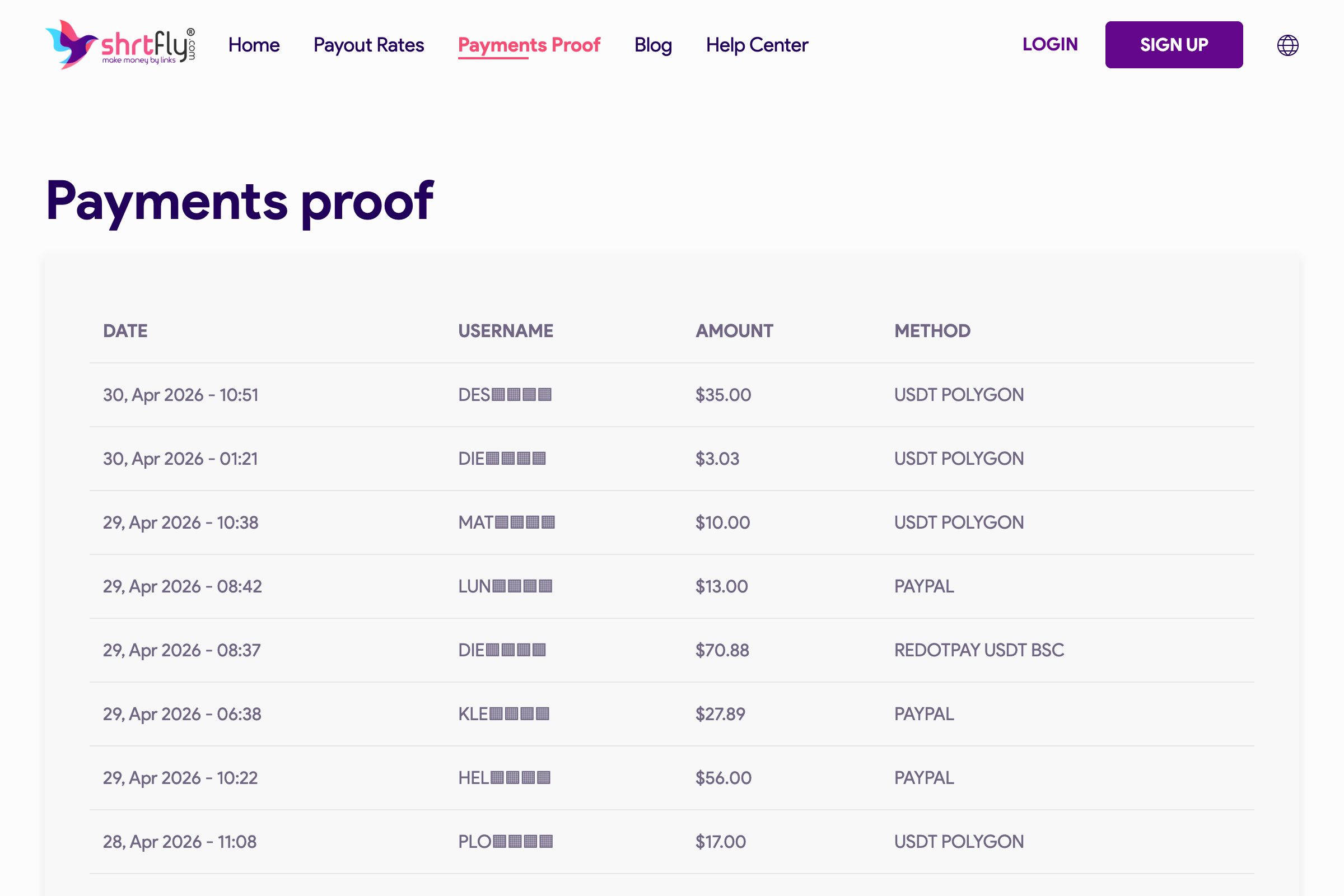
If your audience country mix is a question mark, check your ShrtFly dashboard analytics or your YouTube/blog analytics country breakdown. The top 5 countries usually drive 70%+ of your revenue.
FAQ
Why does Greenland pay the most ($22 CPM) when it’s tiny? Tiny ad market = low competition for ad slots = advertisers pay premium per impression because there are so few. The total Greenland audience is small but per-click revenue is highest globally. Unfortunately, you probably won’t get many Greenland clicks regardless of niche.
Can I block Tier-3 traffic to boost my average CPM? Most monetizing shorteners don’t let you geo-block. The smarter move is to target Tier-1 audiences in your content strategy (English language, US-relevant niches) so Tier-3 traffic naturally becomes a smaller share.
Will the country tier system change in 2026 or beyond? Tier rankings are durable — they track advertiser economics, which don’t shift quickly. Tier-3 has slowly risen as digital advertising matures in those markets, but Tier-1 still dominates and likely will for the next decade. Don’t bet on Tier-3 catching up fast.
Is there a way to earn Tier-1 CPMs from Tier-3 audiences? Sort of — through cross-tier monetization. A Tier-3 audience clicking US-targeted affiliate offers can earn Tier-1-equivalent commissions on conversions. The model isn’t pure CPM — it’s CPM + affiliate stack. We covered the stack in the AdSense + shortener post.
Do social media earnings (TikTok, Instagram, YouTube) follow the same tier pattern? Yes. YouTube Partner Program RPMs show the same tier structure (US ~$5-15, India ~$0.30-2). TikTok Creator Fund similarly. The advertiser economics that drive URL shortener CPMs drive ALL ad-funded online income.
What’s the single highest-leverage thing I can do to increase my average CPM? Switch your primary content language to English. If you’re currently in Hindi/Urdu/Bengali/regional, the same content in English typically gets 3-5x revenue per page-view. The English-language audience pool is dominantly Tier-1.
Are there countries I should specifically target? US first (largest market), then UK, Canada, Australia, Germany. Together those 5 countries cover most Tier-1 ad spend. After that, Tier-2 markets like Brazil and Mexico for Latin American content, or Singapore/UAE for English-language Asian content.
Summing Up!
Best earning countries for online income in 2026 are the same Tier-1 markets that have led ad spend for two decades — US, UK, Canada, Australia, Germany, France. Greenland tops the per-click chart but won’t generate volume.
The actionable insight isn’t WHICH country pays most. It’s that the COUNTRY MIX of your audience determines your earnings far more than total click volume. Tier-1-heavy audiences earn 5-10x more per click than Tier-3-heavy audiences.
If you have a choice in your content strategy (language, niche, distribution), skewing toward Tier-1 from day one is the single highest-leverage decision you’ll make. If you’re locked into Tier-3 audience, the path is volume + stacking other income streams, not chasing higher CPMs.
Sign up free at ShrtFly, shorten your next outbound link, share it on your strongest channel, and check the country breakdown after a week. The data on YOUR audience’s mix is the only number that matters going forward.