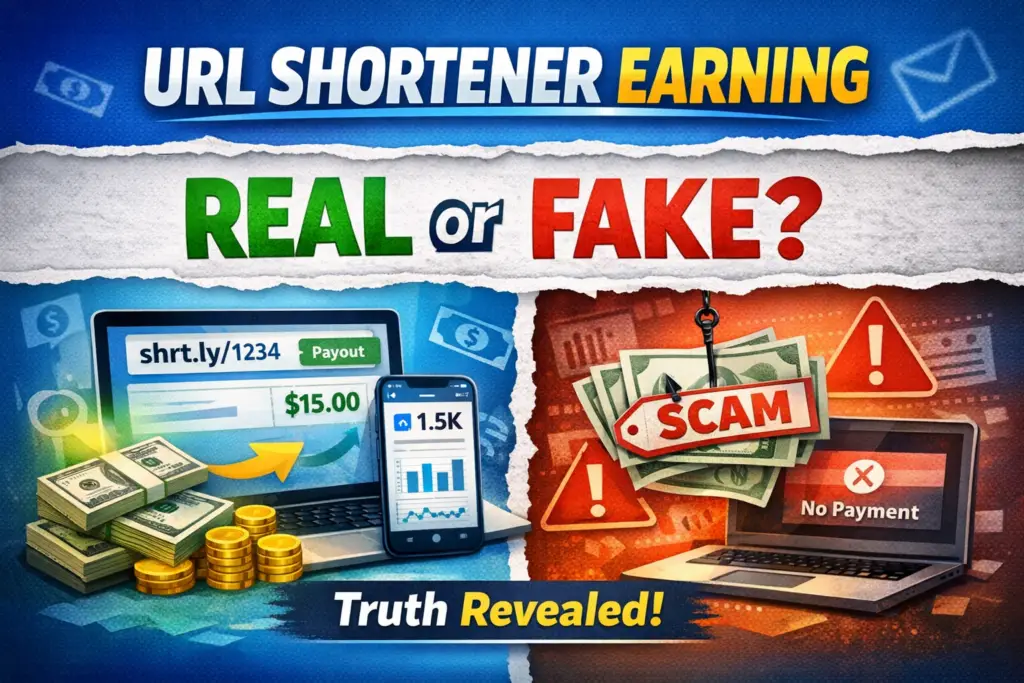
TL;DR: URL shortener earning is real — money lands in PayPal, USDT, Payoneer accounts every day from publishers running monetized links. ShrtFly’s public payments-proof page shows live payouts dated this week. The model is real. What’s fake is the “earn $100 a day with no traffic” claims and the sites that promise $50 CPMs worldwide. This post separates the working model from the scam shells.
I’ve been running monetized URL shorteners since 2018 and watched the same misconception cycle repeat every year: someone discovers the model, gets excited, joins three sketchy platforms in a row, never gets paid, and concludes the whole category is a scam. The category isn’t a scam. The shells someone joined are. There’s a difference, and the difference is checkable in 60 seconds before you commit.
Real or Fake — The Honest 30-Second Answer
| Question | Honest answer |
|---|---|
| Is the URL shortener earning model real? | Yes — publishers withdraw real money daily |
| Will ALL URL shortener sites pay you? | No — many shells deliberately don’t pay |
| Can YOU earn from it? | Only if you have audience clicks — no audience = no income |
| Is it a get-rich-quick path? | No — typical small channels earn $50–$300/month |
| How fast can the first payout land? | Same week at $5 minimum on legit platforms |
| What separates real from fake? | Public payment proofs + transparent CPM + multiple withdrawal methods |
If you only read one section, that’s the article. The rest is the proof and the playbook.
The Actual Proof URL Shortener Earning Is Real
The most direct evidence — public payment proofs that update daily.
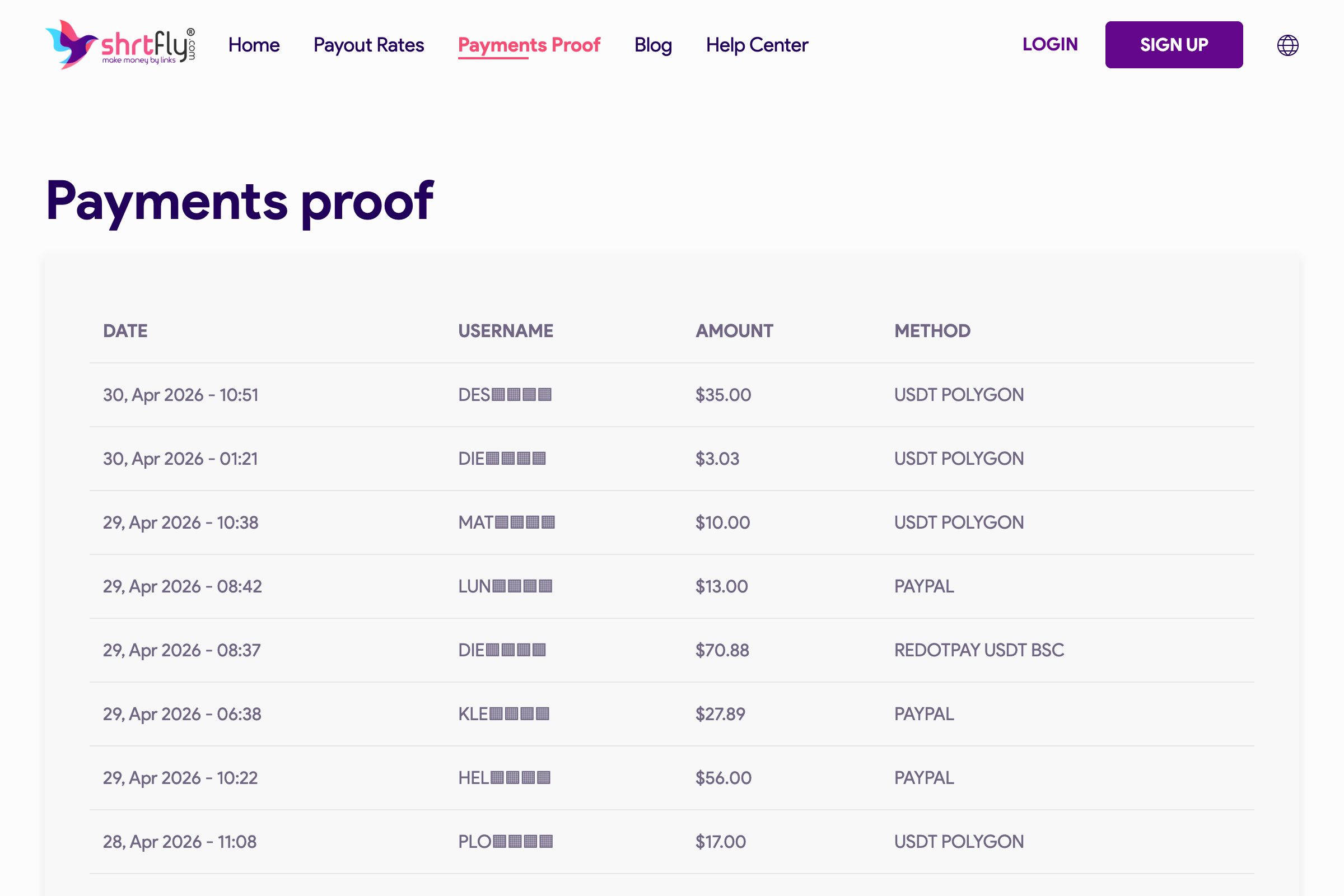
Notice three things on a real proof page:
- Dates are recent. A page where the most recent payout is from 2023 is a graveyard.
- Amounts are varied. Real publishers withdraw odd numbers ($3.03, $27.89, $70.88) — round numbers everywhere is a fake.
- Multiple methods. PayPal, USDT, RedotPay, Payoneer all visible — single-method shells are a yellow flag.
Run that 30-second check on any URL shortener before you sign up. The platforms that pass it are the ones running the real model.
How the Model Actually Pays You
The earning mechanic is mechanical and boring — which is exactly why it works:
- You sign up free at a monetized shortener like ShrtFly
- Paste a long URL (a download link, an article, a deal page) → get a short link back
- Share that short link anywhere — Telegram channel, YouTube description, blog post, Discord
- A real visitor clicks → sees a 5-second popunder ad page → reaches your destination
- The shortener tracks the verified view, calculates CPM based on visitor country, credits your dashboard
- You withdraw at the platform minimum (ShrtFly = $5, daily withdrawal window)
The money comes from the popunder ad networks the shortener partners with. Advertisers pay per impression, the platform takes a cut, the publisher (you) gets the rest. Same flow as YouTube ad revenue or AdSense — just on a single ad slot per click instead of inside long-form content.
What kills the magic for beginners is step 3. Without an audience that already clicks links, none of step 4–6 happens. URL shortener earning is traffic monetization — not traffic creation.
Real CPM Numbers — Not Marketing Fluff
Most “URL shortener earning” articles cite vague CPM ranges like “$5–$15.” Vague numbers are how scammers hide. Here’s the actual published rate card:
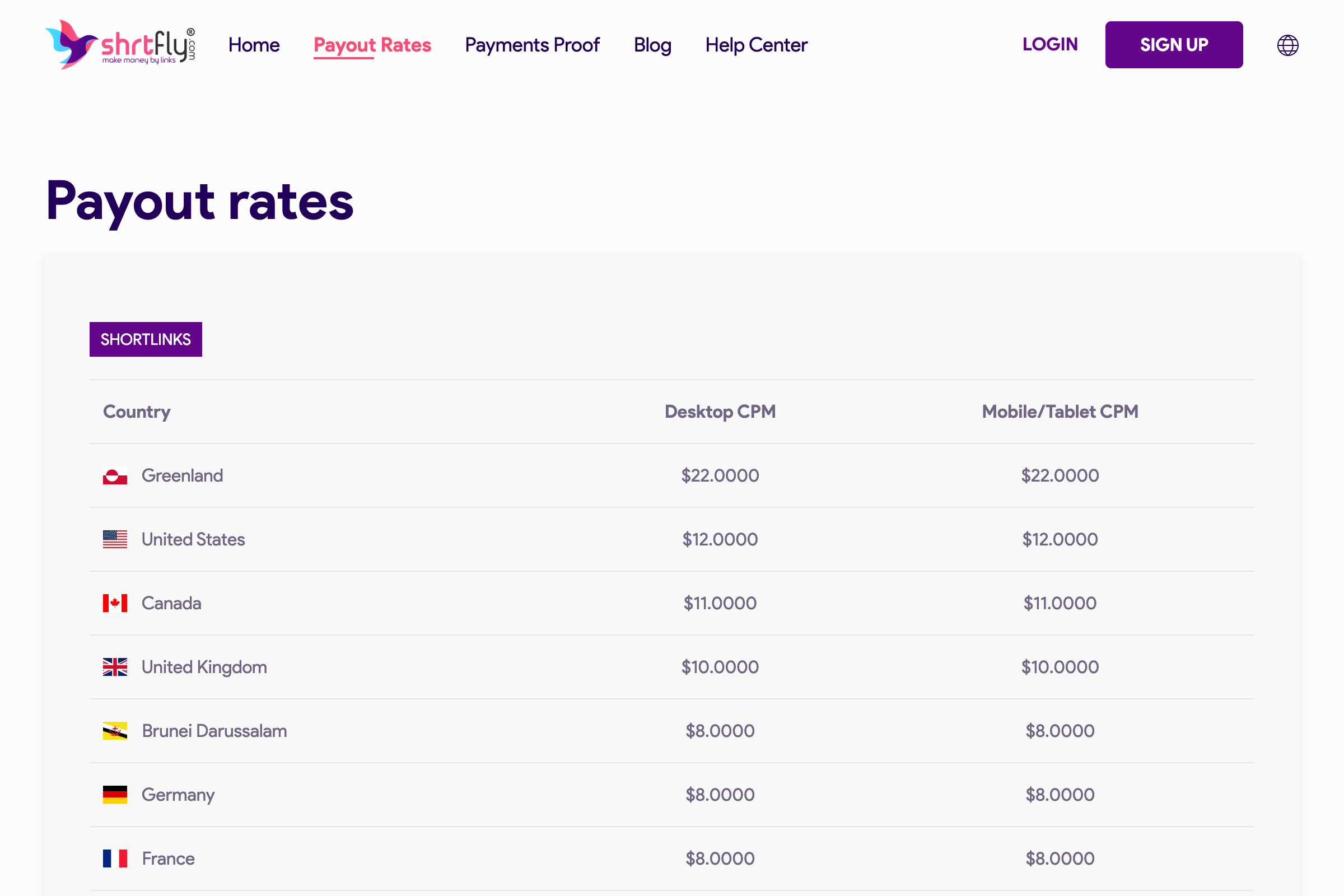
Concrete monthly earnings on those rates:
| Monthly clicks | If 100% USA | If mixed Tier-1 (US/UK/CA mix at ~$11) | If 100% Tier-3 (India/Pakistan) |
|---|---|---|---|
| 1,000 clicks | $12 | $11 | $1–$2 |
| 5,000 clicks | $60 | $55 | $5–$10 |
| 10,000 clicks | $120 | $110 | $10–$20 |
| 30,000 clicks | $360 | $330 | $30–$60 |
| 100,000 clicks | $1,200 | $1,100 | $100–$200 |
If a “URL shortener earnings calculator” tells you 1,000 clicks earns $50 globally, the calculator is lying. Real CPM tops out around $22 (Greenland) and $12 (US), and that’s only on premium Tier-1 traffic.
This is also why country mix matters more than total clicks — a 5,000-click month from US visitors out-earns a 50,000-click month from low-tier traffic. Channel admins who push to US/UK audiences hit $300–$500 monthly fast. Channels with 90% Tier-3 traffic struggle to clear $50.
What FAKE URL Shortener Sites Look Like
Once you’ve seen the real model, the fakes are obvious. Six patterns to walk away from instantly:
1. “Earn $100 a day, no traffic needed.” The earnings model is mechanical — no traffic = no clicks = no income. Anyone promising income without traffic is selling something else, usually a referral pyramid.
2. CPM rates that don’t match reality. “$50 CPM worldwide!” is impossible. Real Tier-1 CPMs cap around $20–$25. Tier-3 caps around $2. A platform claiming $50 average is making up the number to attract signups before quietly closing.
3. No public payment proof page. Legit platforms publish payouts because the proof drives signups. Sketchy ones hide behind “request proof from support.” When you ask, the support email goes silent.
4. Withdrawal blocked behind referral counts. “Withdraw available after 5 referrals.” This isn’t earning — it’s MLM with a shortener wrapper. Real shortener earning has no referral-required gates on your own withdrawals.
5. Single payout method, often “bank transfer only” or “internal wallet.” Real platforms support multiple payouts (PayPal, Payoneer, USDT, Paytm) so publishers in different regions can collect. “We only pay via internal wallet, you can buy stuff in our store” is a giant red flag.
6. Account suspended right before threshold. The classic scam: you build up earnings, hit the withdrawal minimum, account flagged for “suspicious activity,” appeals ignored. Search the platform name + “didn’t pay” before joining — if you find dozens of complaints with the same suspension story, walk away.
The fakes survive on first-month signups. The real platforms (ShrtFly since 2018, AdFly since 2008) survive on payouts because the same publishers come back month after month.
Realistic Earnings — What Actually Happens in Month One
To set expectations honestly, here’s what month one usually looks like for someone starting from scratch:
- Week 1: $0–$2. You’re learning, testing posting formats, figuring out which content prompts clicks.
- Week 2: $3–$8. First withdrawal threshold becomes visible. CTR starts stabilizing.
- Week 3: $5–$15 cumulative. First withdrawal request goes through, money lands in your PayPal in 24–72 hours.
- Week 4: $10–$30 cumulative. You’ve identified which posting format earns. Now it’s just repeating it.
Month-1 earnings of $20–$30 from a fresh start are normal and not a sign the model is fake. Channels that hit $200+/month are typically 3–6 months in with built-up audience and refined posting habits.
If you’re doing it right, the trajectory is gradual but unmistakable — earnings rise as you understand which links your audience actually clicks. The Telegram channel monetization walkthrough covers the audience-and-posting playbook in detail.
Who Should Skip This Model Entirely
URL shortener earning isn’t for everyone. Skip it if:
- You don’t have or plan to build an audience. No clicks = no income. The model can’t pull traffic from nothing.
- You only post text content, no links. A pure-discussion Telegram channel or a thoughts-only blog has nothing to shorten.
- You’re in a niche where Telegram/YouTube/social bans shortened links aggressively. Some niches (gambling, certain crypto) trigger anti-spam systems instantly.
- You’re hoping for $5,000+/month within 30 days. Realistic only at scale (50,000+ Tier-1 monthly clicks).
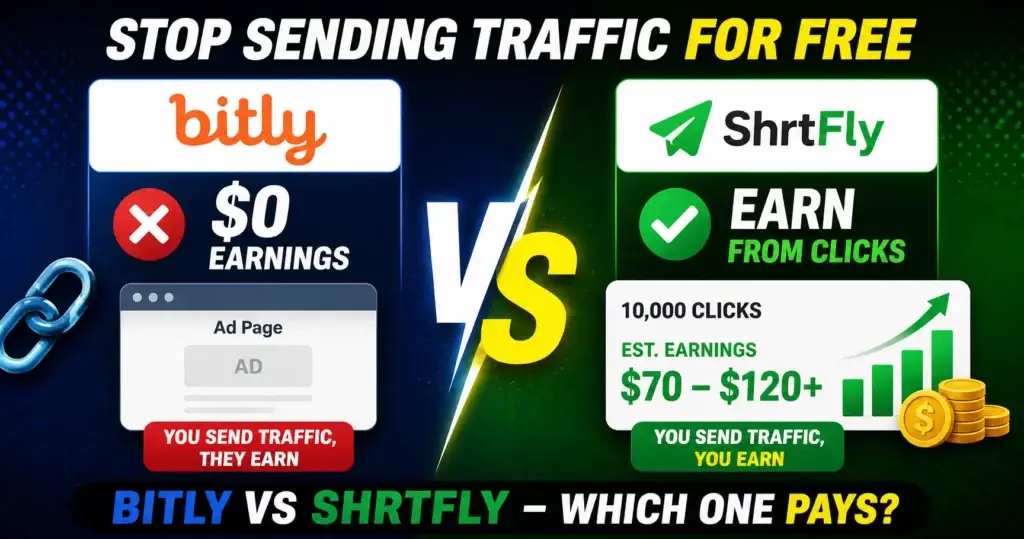
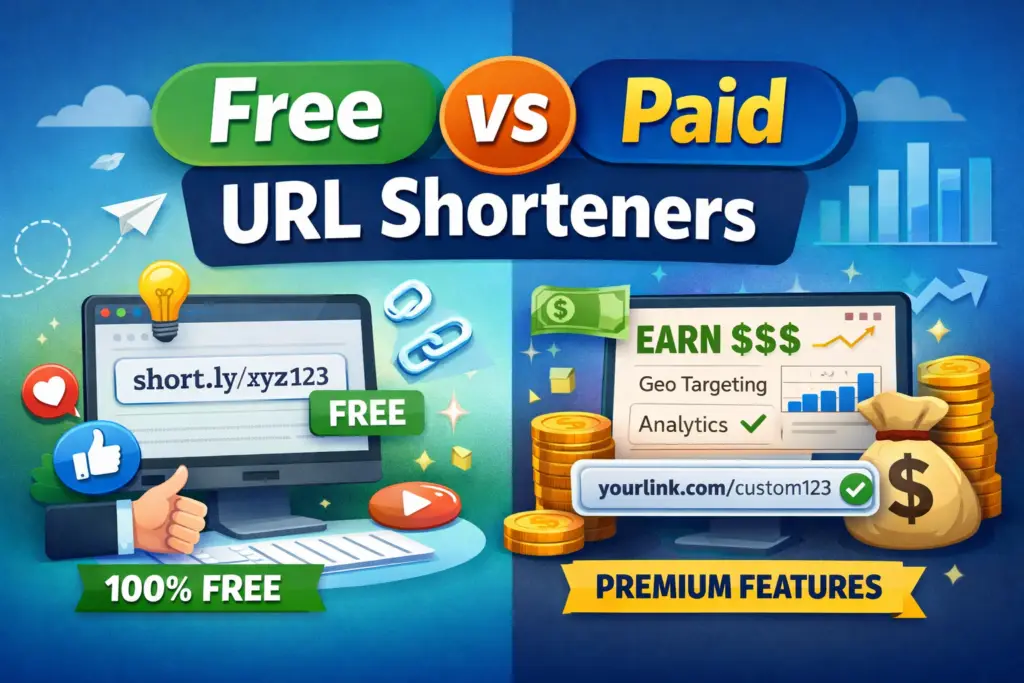
For everyone else — bloggers, YouTubers, channel admins, creators in regions where AdSense is restrictive — the model is genuinely worth running. We covered why ShrtFly often fits this profile in the ShrtFly vs Bitly breakdown and the broader free vs paid shortener comparison.
Quick Legitimacy Checklist (Before You Sign Up)
Run any URL shortener through this 8-point check. Pass all 8 = real. Miss 3+ = walk away.
- [ ] Public payments-proof page exists and shows recent dates
- [ ] CPM rates published per country (not “up to” ranges)
- [ ] Multiple withdrawal methods (PayPal, USDT, Payoneer minimum)
- [ ] Minimum payout threshold is reasonable ($5–$10, not $50+)
- [ ] Platform has been operating 2+ years
- [ ] Has trust factors a sane earning site should have
- [ ] Real customer support (test by emailing pre-signup)
- [ ] Search “[platform] didn’t pay” — read the top 10 results
Sane platforms pass all 8 cleanly. Shells fail at the proof-page stage.
FAQ
Is URL shortener earning real or fake for beginners? The model is real. Whether you can earn from it depends on whether you have or can build an audience that clicks links. With zero audience, you’ll earn zero — that’s the model working as designed, not a scam.
Can I make money with URL shortener earnings without a website? Yes. Telegram channels, YouTube descriptions, Discord servers, and Reddit/forum participation can all drive clicks without you running a website. We have a full Telegram channel earning guide and an Instagram bio link earning walkthrough covering both flows.
How fast does the first payout actually arrive? On ShrtFly with the $5 minimum and a daily withdrawal window, payouts typically settle within 24–72 hours of request. PayPal lands fastest, USDT often same-day. Avoid platforms that “process payouts on the 30th of each month” — that’s a stalling pattern.
Is URL shortener earning safe alongside Google AdSense? Yes if you’re sensible — the ad-page interstitial only shows on the SHORT link redirect, never on your blog itself. Your blog can run AdSense normally. The two revenue streams stack cleanly. We dug into this in why AdSense doesn’t allow URL shorteners directly.
What’s the cleanest legit URL shortener for beginners? The honest fit-test: pick one with a public payments-proof page, $5 minimum payout, multiple withdrawal methods, and 2+ years of operating history. ShrtFly fits all four (we run it, and we publish the proof daily).
Are URL shortener earnings taxable? Yes — treat them as freelance / self-employment income depending on your country. India: it’s “Income from Other Sources” and TDS may apply if a platform pays through Indian rails. US: 1099 if the platform issues one, otherwise self-report. Talk to a tax advisor if your earnings cross into meaningful annual numbers.
Can URL shortener earning replace a full-time income? Theoretically yes (channels with 100K+ daily clicks on Tier-1 traffic clear $20K+/month), but practically no for 99% of people. Treat it as a side income that compounds over time. The realistic ceiling for most creators is $200–$1,500/month.
Summing Up!
URL shortener earning is a real, mechanical, boring revenue model. Visitors click your short link, see a 5-second ad, the ad network pays the platform, the platform pays you. Money moves in cents per click and adds up over real audience volume.
The model gets a bad reputation because the fakes are very loud — promising $100/day with no traffic, citing impossible CPMs, hiding behind referral-gated withdrawals. Those aren’t the model. They’re parasites on the model.
If you have an audience, even a small one, the answer is: yes, real, sign up, run the legitimacy checklist on whichever platform you pick, and start. First withdrawal usually lands within 2–3 weeks. After that it’s just repetition. Sign up free at ShrtFly, shorten one link to test, share it once, and watch the dashboard. The first $5 hits faster than most people expect, and that’s all the proof you ever needed.