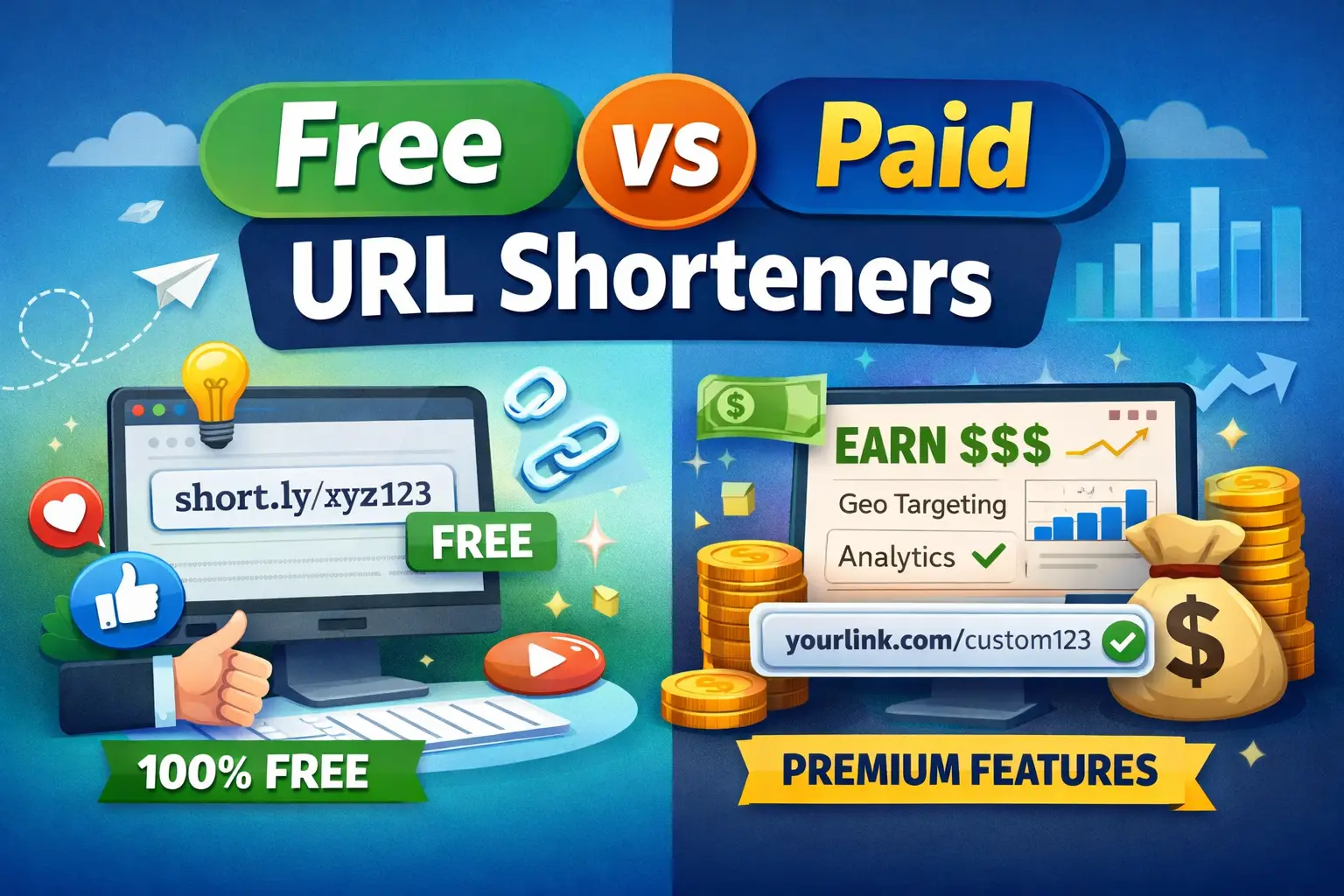
A free URL shortener looks simple on the surface. Paste a long link, get a short one, and share it anywhere.
But in 2026, link shortening is no longer just about making URLs shorter.
Bloggers, YouTubers, Telegram channel owners, and digital creators now use short links for tracking, branding, and even earning money online.
This is where the debate starts: Should you use a free URL shortener or switch to paid short links?
In this guide, we’ll break it down in a clear, practical way—without hype, without sales talk—so you can choose what actually works for your goals.
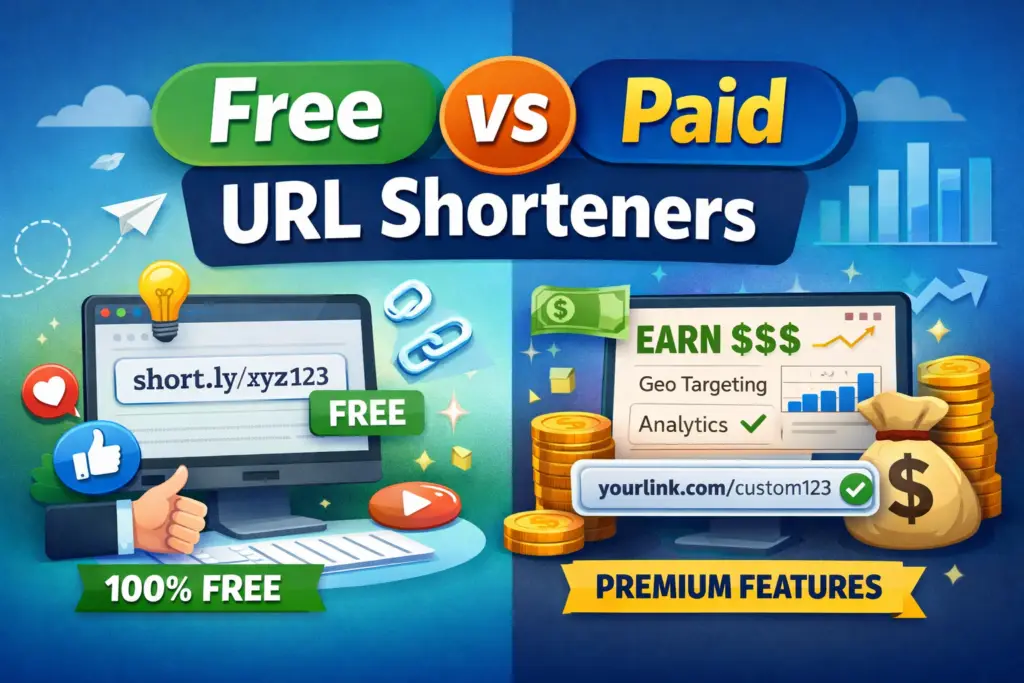
What Is a Free URL Shortener vs Paid Short Links?
Let’s start with the basics.
Free URL Shortener
A free URL shortener is a tool that converts long links into short, shareable URLs at no cost.
Example:
Long URL → https://example.com/blog/how-to-earn-online-2026
Short URL → short.ly/abc123
Typical use cases:
- Sharing links on social media
- Making URLs look clean
- Tracking basic clicks
Most free tools are great for casual or low-volume use.
Paid Short Links
Paid short links are premium link-shortening services that offer advanced features for a monthly or yearly fee.
They usually include:
- Deep analytics
- Custom domains
- Geo-targeting
- Monetization options
- API access
These are built for serious creators, marketers, and earning-focused users.
Why This Matters in 2026
The internet has changed fast—and link usage has changed with it.
Here’s why choosing the right shortener matters more than ever:
1. Traffic Is Harder to Monetize
Platforms pay less. CPMs fluctuate. Algorithms change.
Short links can add an extra monetization layer without creating new content.
2. Platforms Are Stricter
Spam, misleading redirects, and unsafe ads get blocked quickly.
Only policy-friendly shorteners survive long-term.
3. Data Is Power
Creators want to know:
- Where clicks come from
- Which country converts best
- What time traffic performs well
Free tools often fall short here.
4. Branding Is Important
In 2026, trust matters.
A clean branded link performs better than a random-looking URL.
How Free URL Shorteners Work (Step-by-Step)
Here’s how most free tools work:
- You paste your long URL
- The system generates a short link
- You share it on social platforms
- User clicks the link
- User is redirected to the destination
Extra Layer (Some Free Tools Add Ads)
Some free URL shorteners show:
- Interstitial ads
- Countdown pages
- Pop-ups (limited)
Tip:
If ads are aggressive, users may stop trusting your links.
Common Mistakes with Free Tools
- Using unknown shorteners
- Ignoring link reputation
- Sharing links that get blocked on Telegram or YouTube
How Paid Short Links Work (Step-by-Step)
Paid short links usually follow a smarter flow:
- Create a short link using your dashboard
- Customize slug or domain (optional)
- Set rules (geo, device, rotation)
- Track clicks in real time
- Earn revenue or optimize conversions
Advanced Options
- Different destination for US vs India traffic
- Mobile vs desktop redirection
- A/B testing links
- Higher CPM monetization for premium countries
This setup is ideal for scalable earning models.
Free URL Shortener: Pros and Cons
Pros
- No cost
- Easy to use
- Quick setup
- Good for beginners
Cons
- Limited analytics
- No control over ads
- Links may expire
- Higher chance of blocking
- Low or zero earning potential
Best for:
Personal use, testing, or very small audiences.
Paid Short Links: Pros and Cons
Pros
- Advanced tracking
- Higher earning potential
- Custom domains
- Better trust and deliverability
- Priority support
- Stable long-term use
Cons
- Monthly or yearly cost
- Slight learning curve
- Overkill for casual users
Best for:
Bloggers, YouTubers, Telegram admins, affiliate marketers.
Free vs Paid URL Shorteners: Quick Comparison
| Feature | Free URL Shortener | Paid Short Links |
|---|---|---|
| Cost | Free | Paid |
| Analytics | Basic | Advanced |
| Monetization | Limited or none | High potential |
| Custom Domain | ❌ | ✅ |
| Geo Targeting | ❌ | ✅ |
| API Access | ❌ | ✅ |
| Platform Safety | Medium | High |
Best Practices & Expert Tips
If you want long-term success, keep these in mind:
1. Match Tool to Goal
- Just sharing links? Free is fine.
- Earning or scaling? Paid wins.
2. Protect Your Audience
Never use misleading ads or forced redirects.
Trust once broken is hard to rebuild.
3. Track What Matters
Clicks alone don’t mean success.
Focus on quality traffic, not just numbers.
4. Avoid Over-Shortening
Short links inside short links look suspicious and reduce CTR.
5. Test Before Scaling
Always test links across devices and countries.
Common Mistakes to Avoid
Beginners often make these errors:
- Using shady shorteners with poor reputation
- Ignoring platform rules (YouTube, Telegram, Facebook)
- Overloading links with ads
- Not checking link performance
- Depending only on one traffic source
Avoid these, and you stay safe and profitable.
FAQs
1. Is a free URL shortener safe to use?
Yes, if it’s well-known and policy-friendly. Avoid random or newly launched tools.
2. Can I earn money using short links?
Yes. Paid short links usually offer better earning options than free tools.
3. Are paid short links worth it for beginners?
If you have traffic, yes. If not, start free and upgrade later.
4. Do short links affect SEO?
Indirectly. Trusted links with good UX perform better when shared.
5. Can platforms ban short links?
Yes, if they violate guidelines. Always use compliant services.
Final Thoughts
A free URL shortener is a good starting point.
It’s simple, risk-free, and perfect for learning.
But if you’re serious about earning online, tracking performance, or building a brand, paid short links give you control, data, and stability.
There’s no one-size-fits-all answer.
Choose based on your traffic, goals, and long-term vision—not just price.
Smart creators don’t just shorten links.
They use links as assets.